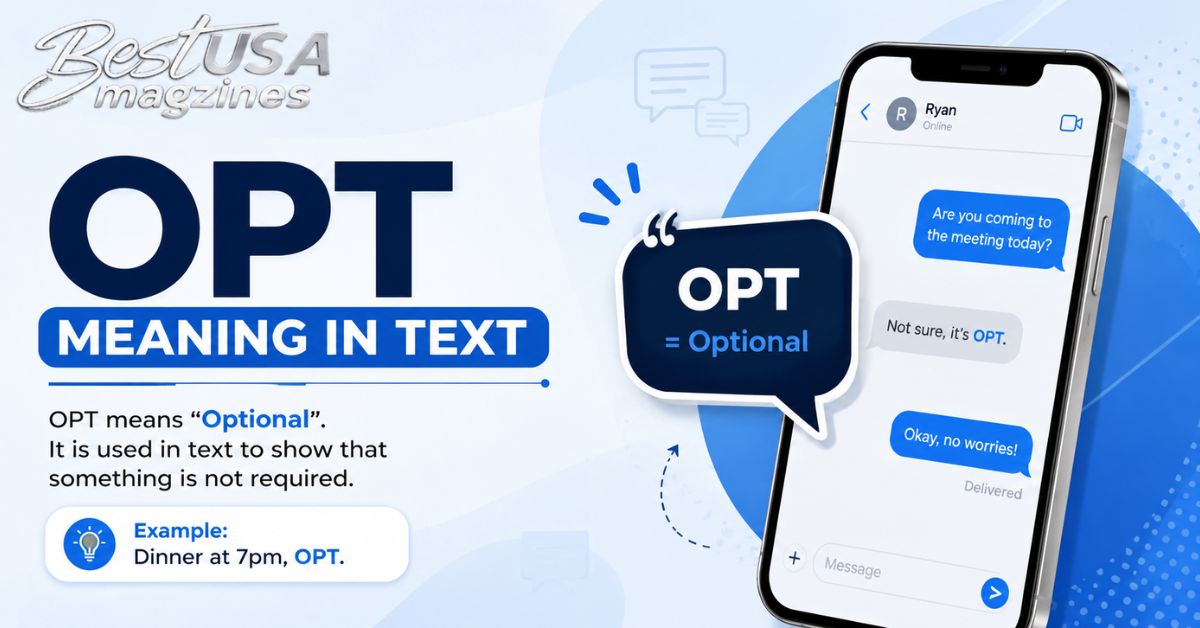
In today’s fast-moving digital world, slang words like OPT Meaning are becoming a normal part of online conversations, especially among Gen Z users. Many people see OPT in chats, Snapchat, Instagram, WhatsApp, or even SMS and get confused about what it actually means. This guide on What Does OPT Mean in Text? (Gen Z Usage & Replies 2026) is designed to make everything simple and easy to understand in clear English.
Here, you will learn the real meaning of OPT, how it is used in everyday conversations, and how its meaning can change depending on context and platform. We will also explore real chat examples, different tones, and reply styles so you can confidently understand and use OPT in your own messages without any confusion.
OPT Meaning in Text
- To choose or decide
OPT commonly means to select one option from multiple choices. It’s used when someone is making a decision in casual conversation. - To prefer something
In Gen Z texting, OPT often shows preference, like “I opt for this plan,” meaning I prefer it. - To enroll or sign up
In some cases, OPT refers to opting into a service, group, or feature in digital platforms. - To decline or opt-out
It can also mean rejecting something, especially in formal or semi-formal communication. - Action-based decision slang
Gen Z sometimes uses OPT as a short form for choosing quickly in fast chats.
Is OPT an Acronym?
OPT is not always an acronym in texting. Most of the time, it is simply derived from the verb “opt,” meaning to choose or decide. However, in some professional contexts, it can stand for specific terms like Optional Practical Training, but that meaning is unrelated to casual texting.
What Does OPT Meaning in Chat?
- Quick decision-making slang
In chat conversations, OPT is used to instantly express a choice without long explanations. - Preference indicator
It helps show what someone prefers in group discussions or planning. - Agreement or selection response
People use it to confirm what option they are picking in a conversation. - Neutral communication style
OPT keeps messages short, clear, and non-emotional in group chats. - Context-based meaning
The meaning changes depending on whether the chat is formal, casual, or professional.
Example:
“I’ll OPT for pizza tonight instead of burgers.”
OPT Meaning Slang
- Short form of ‘opt for’
Used when someone chooses one thing over another in casual texting. - Decision expression in Gen Z language
It simplifies communication when making fast online decisions. - Informal chat abbreviation
Often used in DMs, group chats, and gaming conversations. - Soft preference signal
It shows choice without sounding strict or commanding. - Flexible usage slang
Its meaning adapts depending on tone and situation.
OPT Meaning Across Different Platforms
OPT Meaning on Snapchat
- Used for quick decisions in snaps or chat replies.
- Often appears in group planning or event selection.
- Can indicate choosing filters, plans, or people.
- Keeps conversations short and casual.
OPT Meaning on TikTok
- Used in comment sections to show preference.
- Appears in trend discussions and voting-style comments.
- Often part of reaction-based engagement.
Read More : EVB Meaning in Text Messages
OPT Meaning on Instagram
- Used in DMs for choosing content or options.
- Common in polls or story replies.
- Shows user preference in collaborations.
OPT Meaning on WhatsApp
- Frequently used in group planning chats.
- Helps users quickly select travel, food, or event options.
- Keeps conversations efficient and organized.
OPT Meaning in SMS Text Messages
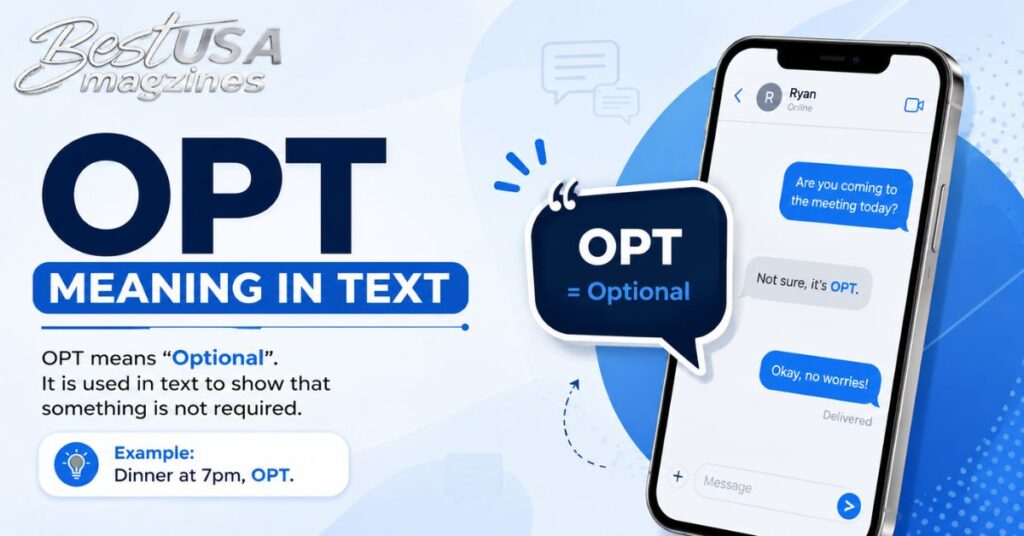
- Used in simple decision-making messages.
- Shortens formal sentences into quick responses.
- Works well in professional but casual SMS communication.
Platform Comparison Table
| Platform | OPT Meaning | Usage Style |
| Snapchat | Quick choice in chats | Casual & fast |
| TikTok | Preference in comments | Trend-based |
| Selection in DMs/stories | Social & interactive | |
| Group decisions | Practical & organized |
Tone & Context Variations of OPT
- Choice-based expression
OPT reflects decision-making in everyday conversations. - Flexible emotional tone
It can sound neutral, friendly, or serious depending on usage. - Highly contextual slang
Meaning depends heavily on sentence structure and intent. - Widely adaptable word
Used in personal, social, and semi-professional chats. - Gen Z communication shortcut
Keeps texting fast and minimal while still clear.
Read More : Sky Bri Net Worth 2026
1. Funny Tone
“I’ll OPT for snacks instead of gym today 😂”
2. Sarcastic Tone
“Oh great, I OPT for chaos again…”
3. Romantic Tone
“I OPT for you every single time ❤️”
4. Angry Tone
“I didn’t OPT for this drama!”
5. Playful Tone
“Let’s OPT for adventure mode today!”
10 More Real Chat Examples
- I OPT for pizza tonight.
- She OPT for the blue dress.
- We OPT out of the meeting.
- I’ll OPT for staying home.
- They OPT for a road trip.
- He OPT for the new update.
- I OPT for coffee over tea.
- Let’s OPT for plan B.
- She OPT for silence.
- I OPT for peace today.
Grammar & Language Role of OPT
Part of Speech
- Verb (primary usage in texting and formal English)
- Action word indicating choice or decision
- Works in both casual and academic contexts
- Can appear with prepositions like “for” or “out”
Sentence Role
- Used as a main verb in decision sentences
- Helps express preference or selection clearly
- Common in both short and long sentences
- Functions as an action indicator
Sentence Position
- Usually placed before the object (“opt for pizza”)
- Can appear mid-sentence depending on structure
- Flexible placement in informal writing
- Maintains meaning regardless of position
Grammar Insight Table
| Feature | Description | Example |
| Part of Speech | Verb | I opt for tea |
| Structure | Verb + preposition | opt for / opt out |
| Usage Style | Formal & informal | Chat or essay |
How to Reply When Someone Says “OPT Meaning”
Funny Replies
- “Bold choice, approved 😂”
- “You just OPT-ed your destiny!”
Serious Replies
- “Okay, noted your preference.”
- “That option works for me.”
Flirty Replies
- “You opt for me, right? 😉”
- “Good choice… me included?”
Neutral Replies
- “Alright, let’s go with that.”
- “Sounds good to me.”
Is OPT Meaning Rude or Bad?
Is OPT Rude?
- Not rude at all; it is neutral language.
- Depends on tone and context of usage.
Is It Disrespectful?
- No, it simply shows a choice or preference.
- Common in professional and casual chats.
Is It a Bad Word?
- Not a bad or offensive word.
- Safe for all types of communication.
Can You Use It in School?
- Yes, especially in assignments or discussions.
- Common in academic English writing.
Can You Use It at Work?
- Yes, in emails and decision-making discussions.
- Suitable for professional communication.
Who Uses OPT?
Age Group
- Mostly Gen Z and Millennials
- Also used by professionals in writing
- Common among students and online users
Regions
- Global usage in English-speaking countries
- Popular in South Asia and Western countries
- Widely used in internet culture worldwide
Most Common Platforms
- Messaging apps
- Social media platforms
- Email communication
- Academic writing tools
Origin & Internet Culture
The word “opt” originates from Latin “optare,” meaning “to choose.” Over time, it entered English vocabulary as a verb. In internet culture, Gen Z simplified it into quick texting slang. Its popularity grew with messaging apps where short, efficient communication became essential. Today, OPT is widely recognized as a flexible choice-based expression across digital platforms.
Read More : Paul Mauro Net Worth
Comparison Table: OPT vs Other Slang
| Slang | Meaning | Usage Context |
| OPT | To choose or decide | Neutral decision-making |
| GOAT | Greatest of all time | Praise/admiration |
| IMO | In my opinion | Opinion sharing |
| TBH | To be honest | Honest expression |
Real-World Usage Insight
In real-world communication, OPT is widely used in decision-making scenarios like planning trips, selecting food, or choosing options in apps. It simplifies communication, reduces sentence length, and helps users express preferences quickly. Its versatility makes it a strong part of modern digital language, especially in fast-paced conversations.
FAQs
What does OPT meaning in text messages?
OPT in text messages means to choose or select something. It shows preference or decision in casual or formal digital conversations.
Is OPT slang or formal English?
OPT is both formal and informal. It is commonly used in slang chats but also appears in professional and academic English writing.
What does OPT stand for in chatting?
In chatting, OPT stands for “opt for,” meaning to choose one option over another in quick and simple digital conversations.
Can OPT meaning opt-out in text?
Yes, OPT can mean opt-out, which refers to refusing or declining something like subscriptions, offers, or group participation in messages.
Is OPT a rude word in chats?
No, OPT is not rude. It is a neutral word used to express choice, preference, or decision without any negative meaning.
How do Gen Z use OPT meaning in conversations?
Gen Z uses OPT as a short, quick way to show preference or make decisions in fast-paced chats and social media interactions.
Where is OPT commonly used online?
OPT is commonly used on WhatsApp, Instagram, Snapchat, TikTok, and SMS to express quick decisions or preferences in conversations.
Can OPT be used in professional writing?
Yes, OPT is acceptable in professional writing when expressing decisions, preferences, or choices in emails, reports, and workplace communication.
What is the origin of the word OPT?
OPT comes from Latin “optare,” meaning to choose. It evolved into English and now widely used in modern digital communication.
How should I reply when someone says OPT?
You can reply simply by agreeing, asking for clarification, or confirming the choice depending on context, tone, and conversation style.
Conclusion
This article explains the OPT meaning in text messages and how it is used in modern digital communication, especially among Gen Z users. OPT mainly refers to choosing, selecting, or preferring one option over another in chats, social media, and messaging apps like WhatsApp, Instagram, Snapchat, TikTok, and SMS. It can also mean opting out in some contexts. The article breaks down its usage across platforms, tone variations, grammar role, and real-life examples to help readers clearly understand its meaning in different situations.
It also covers how to reply when someone uses OPT meaning, whether it is rude or not, and who commonly uses it online. Additionally, it explains its origin, cultural relevance, and comparison with other slang terms. With FAQs and practical examples, the guide helps users confidently understand and use OPT in everyday conversations while keeping communication simple, clear, and context-aware in both casual and professional settings.