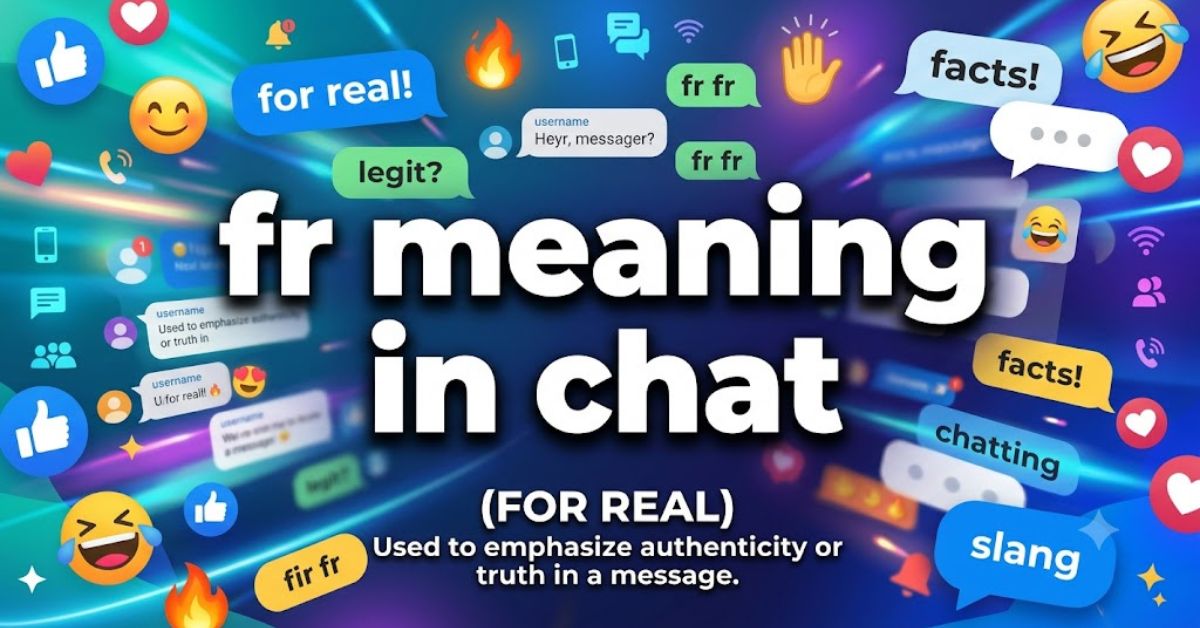
Ever received a text that simply said “FR” and had no idea what to say back? Those two letters can carry more meaning than you might expect. The fr meaning in chat is usually “for real.” People use it to agree, show honesty, or emphasize that they genuinely mean something.
But there’s a little more to it. “FR,” “FR?” and “FRFR” can all feel different depending on the conversation. You might see FR in a TikTok comment, Instagram caption, Snapchat message, WhatsApp chat, or Twitter post. For example, “That movie was amazing fr” shows genuine excitement, while “You did that? FR?” asks for confirmation. Once you understand the context, tone, and punctuation, this tiny piece of internet slang becomes much easier to use.
You Saw It and Got Confused, Right?
You’ve probably seen “FR” in a text, comment, or group chat and wondered what those two letters mean. The good news is that it’s pretty simple.FR usually means “for real.” In fr meaning in chat, people use it to show agreement, honesty, or strong feelings about something.
For example, if your friend says, “This week was exhausting,” you might reply:
“FR!”
That means “For real! I feel the same way.”
You may also see “FR?” when someone wants to check if something is true.
“You met your favorite singer? FR?”
Here, the person means, “Seriously? Did that really happen?”
FR has become common internet slang and texting shorthand. Teens, people in their twenties, and older millennials may use it in casual conversations.
You might notice it on:
- TikTok comments
- Instagram posts
- Snapchat messages
- WhatsApp chats
- Twitter conversations
- Group chats
Once you understand the context, FR becomes easy to recognize.
Read More: 280+ 2 Months Old Baby Caption That Melts Every Heart
Here’s What FR Actually Does in a Conversation
FR does more than shorten the words “for real.” It can add emotional weight to a sentence and make your feelings sound stronger. When you write, “That movie was amazing fr,” you’re saying you genuinely mean it.FR can show sincerity or genuineness. It can also show agreement when someone says something you strongly believe.
For example:
Friend: “We need a vacation.”
You: “FR!”
You can also place FR at the end of a sentence:
“I’m so tired fr.”
In this case, FR adds emphasis.
People sometimes use “Me fr” when they strongly relate to a post, joke, or situation.
“Me fr 😭”
That means, “That is literally me.”
You’ll also see FRFR, which means “for real for real.” It adds even more emphasis.
Similar expressions include:
- No cap
- Facts
- Deadass
- On god
- Seriously
- Honestly
- I mean it
- I’m not even joking
The exact meaning still depends on the context, tone, punctuation, and emojis around it.
Where You’ll Actually See People Using It
FR appears almost everywhere people use casual online communication. Social media has made this texting shorthand especially common.
- On TikTok, someone might comment:
“This is so true fr.”
- On Instagram, a person might write:
“That outfit looks amazing fr.”
- On Snapchat, friends often use FR during quick conversations.
“You’re coming tonight?”
“FR.”
WhatsApp and group chats work the same way. Someone can type FR as a quick agreement without writing a full sentence. You may also notice FR on Twitter, especially in short reactions where character limits once encouraged people to keep messages brief.
The slang can appear in different situations:
- Casual conversation
- Group chat agreement
- Public comments
- Memes and videos
- Romantic contexts or flirting
- Friendly texting
However, FR doesn’t fit every situation. Professional messages and work emails usually need clearer language. The same rule applies to serious posts. If someone shares upsetting news, a simple “fr” may sound careless. That’s why context switching matters. Online slang works best when the situation feels casual.
Read More: BSFS Meaning: What It Actually Means When Someone Calls You Their BSFS
Why Tone Changes Everything
Two letters can carry a surprising amount of meaning. With FR, tone often decides whether your message sounds friendly, serious, sarcastic, or dismissive.
Consider this:
“That was a great idea fr.”
It could show genuine praise. However, someone could also use it sarcastically if the idea clearly went wrong. That’s where sarcasm can create confusion. Text messages don’t give you facial expressions or voice tone.
Emojis can sometimes make your meaning clearer.
“You really did that fr 😂”
Here, the emoji adds a playful feeling.
Punctuation matters too:
“FR.” = Strong agreement.
“FR?” = Asking for confirmation.
“fr 😭” = Often emotional or humorous.
FR usually feels natural with close friends. In romantic contexts or flirting, it can make a compliment sound more genuine.
“You looked amazing tonight fr.”
Still, be careful with serious conversations. A one-word “fr” reply to someone’s emotional message may seem cold. Older relatives, coworkers, or people unfamiliar with internet slang may also misunderstand it. When clarity matters, words like “seriously” or “honestly” often work better.
Times When FR Makes You Look Bad
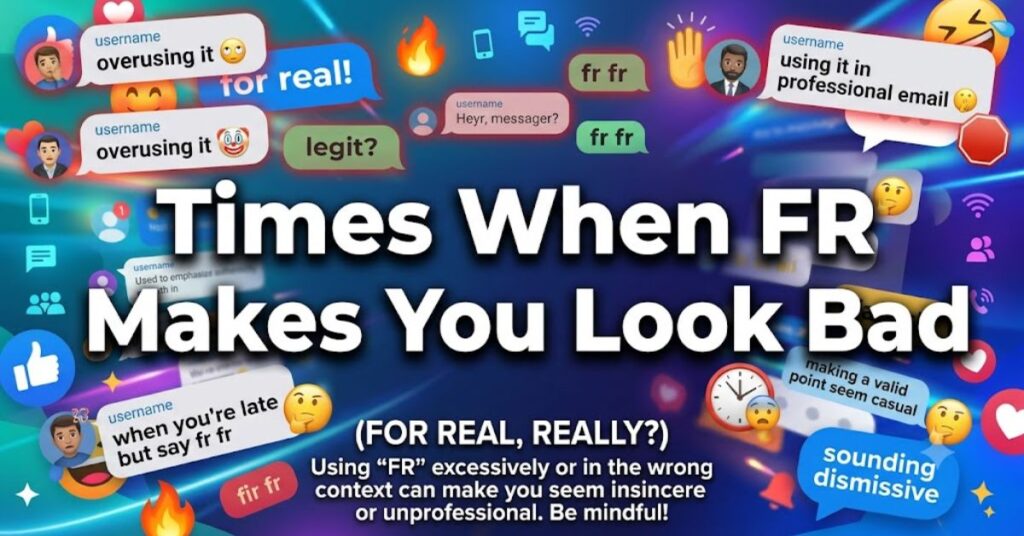
FR works well in casual conversations. However, the wrong situation can make it sound careless or even rude. The fr meaning in chat depends heavily on context. A quick “fr” may feel friendly with a close friend but dismissive in a serious conversation. Avoid using FR when someone shares something deeply personal or upsetting.
For example:
Friend: “My dog passed away yesterday.”
You: “Fr.” ❌
That reply feels cold because it doesn’t show enough empathy.
You should also avoid FR in:
- Professional messages and work emails
- Formal conversations
- Serious posts
- Public comments about sensitive topics
- Messages to older relatives who don’t know the slang
Context switching matters here. Internet slang doesn’t belong in every conversation.
Even with friends, don’t add FR to every sentence. Overusing it makes the phrase lose its emotional weight.
When the situation calls for clarity, use seriously, honestly, or I mean it instead. Sometimes simple words say more.
Other Ways to Say the Same Thing
FR isn’t the only way to show that you genuinely agree or mean something.
Different phrases carry different levels of emotion. Your choice should match the conversation and the person you’re talking to.
For casual chats, you might use:
- No cap: I’m telling the truth.
- Facts: I strongly agree.
- Deadass: I’m completely serious.
- On god: I’m strongly saying it’s true.
- FRFR: For real for real.
For clearer conversations, try:
- Seriously
- Honestly
- I mean it
- Actually
- I’m not even joking
For example:
Friend: “That exam was impossible.”
You: “Facts.”
Or:
Friend: “You really liked the movie?”
You: “Seriously. I loved it.”
FR sounds more like casual texting shorthand. “Honestly” feels clearer and works in more situations.
You may also come across related slang such as ND, HML, and YHU. Each one has its own meaning, so don’t assume every short abbreviation works like FR.The key is simple: choose the phrase that matches your tone.
What It Looks Like in Real Messages
Seeing FR in real conversations makes its meaning much easier to understand. The phrase can appear at the beginning, middle, or end of a message. Sometimes it even stands alone as a complete reply.
Showing agreement
Friend: “We need a vacation.”
You: “FR 😭”
Here, you strongly agree with your friend.
Showing sincerity
“You looked amazing tonight fr.”
The writer wants to make the compliment sound genuine.
Asking for confirmation
“You actually quit your job? FR?”
The question mark changes the meaning. Now the person wants confirmation.
Showing relatability
“Me fr 😂”
This means the person strongly relates to a post, meme, or situation.
Using FRFR
“I’m never doing that again FRFR.”
The speaker wants extra emphasis. FRFR means “for real for real.”
You can find these examples across:
- TikTok
- Snapchat
- Group chat messages
The surrounding words matter. Emojis and punctuation can also change how the message feels.
Read More: Tayla Lynn Net Worth 2025: Country Legacy & Success Story
A Bit of History (And Why It Matters)
FR didn’t appear out of nowhere. It developed from the everyday phrase “for real” and became popular as people looked for faster ways to communicate online. As texting grew, people started shortening common expressions. These shortcuts became part of modern internet slang and everyday texting shorthand.FR became especially common across social platforms where people communicate quickly.
You can now see it on:
- TikTok
- Snapchat
- Group chats
Online communities also helped spread the phrase across different age groups and regions.
The expression has roots in spoken language, including usage in Black American communities. Later, social media helped carry it into wider online conversations.
Today, teens and people in their twenties often use FR naturally. Older millennials and Gen X may recognize it too, although usage varies from person to person.
The rise of short-form communication also played a role. Character limits encouraged people to say more with fewer letters. Still, slang changes quickly. A phrase that feels fresh today may sound outdated later. That’s why understanding the history/origin helps. It shows that FR isn’t just a random abbreviation. It’s part of how online communication keeps changing.
Ways People Get FR Wrong
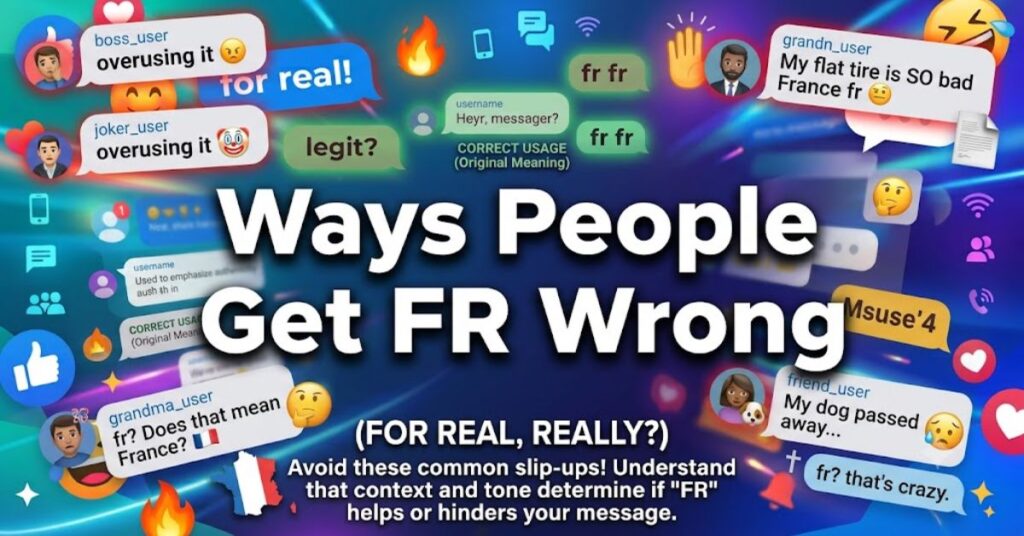
FR looks simple, but people can still misuse it. Understanding the fr meaning in chat depends on the words around it, the tone, and the situation.
One common mistake is thinking FR always means agreement. It doesn’t.
Friend: “I can’t believe he said that.”
You: “FR?”
Here, you’re asking for confirmation. You’re not agreeing yet. Another mistake involves FRFR. Some people add it to every sentence for extra emphasis.
That can make the phrase feel forced.
Common mistakes include:
- Using FR in every message
- Confusing FR with FR?
- Treating FR as automatically positive
- Using it during serious conversations
- Ignoring tone and context
- Using it in professional messages
- Forgetting that punctuation can change the meaning
Me fr also has a specific use. It usually means strong personal agreement or relatability.
“Me fr 😂”
That means, “That’s exactly me.”
Don’t assume everyone understands internet slang either. Older relatives, coworkers, or people outside your usual social circle may not know it.
The safest rule is simple: use FR when the conversation feels casual. When clarity matters more than slang, say seriously, honestly, or I mean it instead.
Questions People Actually Ask
Is FR rude to use?
FR isn’t rude when used casually. However, the fr meaning in chat can sound dismissive during serious or emotional conversations.
Does it mean the same thing everywhere?
The fr meaning in chat usually stays the same, but tone, context, punctuation, and platform can change how people understand it.
Should I use FR in professional messages?
Avoid FR in professional messages or work emails. Use clear words like seriously or honestly when formal communication matters most.
What’s the difference between FR and FRFR?
FR means for real, while FRFR means for real for real. FRFR adds stronger emphasis when people want to sound serious.
Can older people use FR without seeming weird?
Yes, older people can use FR. The fr meaning in chat stays clear when the slang matches their communication style.
That’s Pretty Much It
The fr meaning in chat makes conversations easier. FR usually means for real. People use it to show agreement, honesty, or feelings. You may see FR in texts, group chats, TikTok comments, Instagram posts, and WhatsApp messages. FR can also appear as FR? when someone wants confirmation. FRFR adds extra emphasis, while Me fr shows personal connection. The meaning often depends on context, tone, and punctuation.
The fr meaning in chat is simple once you know how people use it. Use FR in casual conversations with friends and people who understand internet slang. Avoid it in serious posts, formal messages, and professional emails when clear language works better. Words like seriously, honestly, and I mean it can sound natural in formal settings. Now that you understand the fr meaning in chat, you can spot it and reply with confidence.