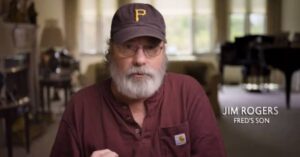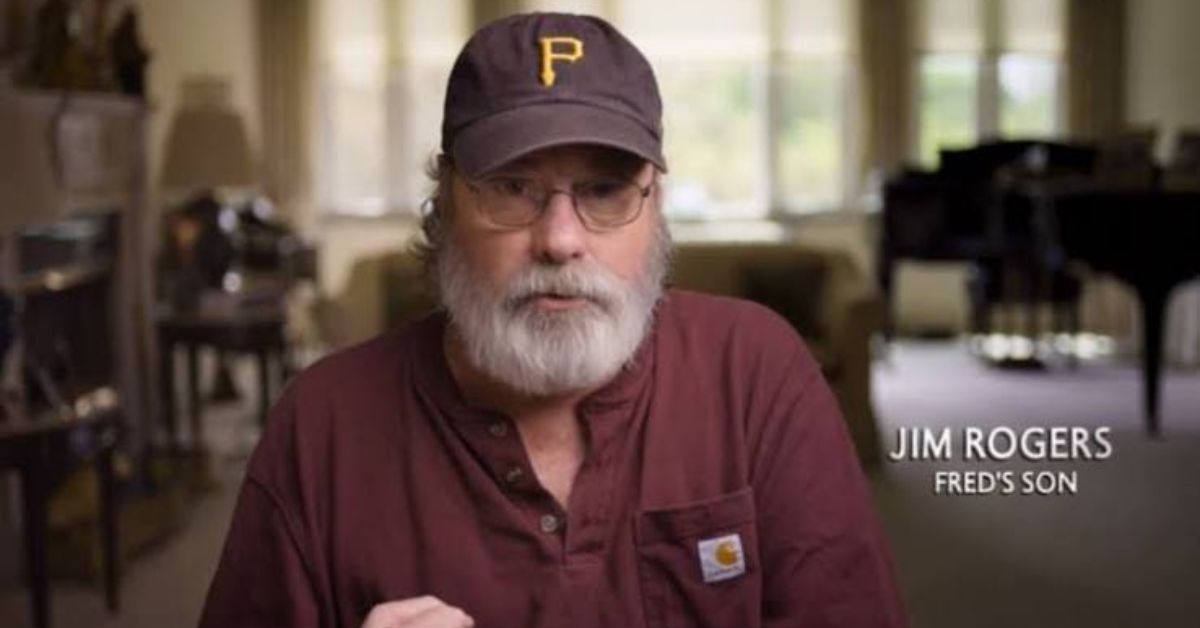
Millions of people grew up watching Fred Rogers walk through that front door, change his cardigan, and talk gently about big feelings. Far fewer know much about James Byrd Rogers, the man who grew up calling that same television icon “Dad.” As the eldest son of Fred Rogers and Joanne Rogers, James experienced something most children never do: a father whose on-screen warmth was, by every account, exactly who he was at home too.
Unlike celebrity children who lean into their family name, James Byrd Rogers took the opposite route. He built a life defined by privacy, steady family relationships, and a low public profile that has held for decades. This article looks at what is actually known about James Byrd Rogers, from his childhood in a house built on emotional honesty to the quiet legacy he now carries forward as Fred Rogers’ son.
Early Life: Growing Up in the Neighborhood
James Byrd Rogers was born in 1959, the first child of Fred Rogers and his wife, Joanne Rogers (born Sara Joanne Byrd). His younger brother, John Rogers, followed in 1961. The two boys grew up in a household shaped by two very different but complementary talents: Fred’s gift for television and storytelling, and Joanne’s career as an accomplished concert pianist.
Fred and Joanne met while both were students at Rollins College in Winter Park, Florida, and married in 1952. By the time James was born, Fred Rogers was already deep into the early work that would eventually become Mister Rogers’ Neighborhood, the long-running PBS children’s series that aired from 1968 to 2001.
Growing up as a Fred Rogers son meant living around a set of values that were rarely just talk. Fred was known for treating emotional honesty as something worth practicing daily, not just preaching on camera. James and John occasionally appeared on their father’s show as children, offering viewers small, carefully guarded glimpses into the Rogers family’s private world.
A few things stand out about this early period:
- The Rogers household prioritized conversation and listening over performance or public image.
- Both parents encouraged the boys to develop their own interests rather than simply mirroring their father’s career.
- Music, faith, and emotional expression were treated as everyday parts of family life, not special occasions.
Life in the Spotlight: The Challenges of Being Fred Rogers’ Son
Being the child of one of America’s most trusted public figures came with a particular kind of pressure. Fred Rogers wasn’t simply well known; he was widely seen as a moral compass for an entire generation. That reputation followed his sons into classrooms, colleges, and everyday interactions, whether they wanted it there or not.
By the time James reached adulthood, that pressure became harder to ignore. A widely cited 1978 People magazine feature reported that during his freshman year at Rollins College, his father’s own alma mater, James stopped writing home and largely stopped answering his parents’ calls. Fred Rogers later described it as a difficult year, and Joanne Rogers acknowledged there had been real tension in the family during that stretch.
This period reflects something many children of famous parents experience but rarely get to describe publicly: the need to step back from a well-known family identity in order to figure out who they are as individuals. James reportedly told People at the time that he was simply trying to “get used to being a person” on his own terms.
Common challenges that came with being Fred Rogers’ son included:
- Constant comparisons to his father’s public image of patience and kindness.
- Assumptions from others about who he “should” be, based on a television persona.
- Limited space to make ordinary mistakes without them feeling symbolic.
- Balancing genuine family closeness with a need for independence.
Education and Career Path: A Different Direction
James Byrd Rogers followed his father’s educational footsteps in one clear way: he enrolled at Rollins College in Winter Park, Florida, the same liberal arts school where Fred met Joanne years earlier. The choice created an obvious symbolic link between father and son, even as James used those college years to establish real emotional distance from his family.
Where the two paths diverged is career direction. Fred Rogers built his life around television, music education, and child development, eventually becoming an ordained Presbyterian minister who used broadcasting as his ministry. James Byrd Rogers, by contrast, has never pursued a public-facing career built around the Rogers name.
He has not published a memoir centered on his father, has not become a recurring media commentator, and has generally avoided interviews about his personal or professional life. This is consistent with reporting from the early 2000s indicating he lived in Allison Park, Pennsylvania, while his brother John was based in Florida, both maintaining ordinary, non-celebrity lives.
Key takeaways about his education and career approach:
- Attending Rollins College connected him to his father’s history without dictating his future.
- He appears to have deliberately avoided any career built on his father’s fame.
- Details about his specific profession have never been widely publicized, which is itself consistent with the family’s long-standing preference for privacy.
This restraint stands out. Plenty of people with a famous parent eventually monetize that connection in some way. James Byrd Rogers, based on everything publicly documented, chose not to.
Family and Personal Life: The Power of Privacy
If there is one consistent theme across every reliable account of James Byrd Rogers’ adult life, it is privacy. He returned to Mister Rogers’ Neighborhood at least once as an adult, appearing with his own young son in a 1989 episode, a rare on-camera moment that briefly reconnected the Rogers family story with the show that made his father famous.
Beyond that appearance, James has kept his personal life largely out of public view. Reports from the early 2000s referenced grandchildren of Fred and Joanne Rogers, suggesting James went on to raise a family of his own away from cameras and interviews. Specific details about his spouse, the size of his family, or his day-to-day life have not been confirmed through credible reporting, which reflects how carefully that privacy has been maintained over the years.
Reasons this kind of privacy matters:
- It allowed James to build relationships based on who he actually is, not his last name.
- It protected his children and extended family from unwanted public attention.
- It reflects a value system passed down directly from his parents, rather than a defensive reaction to fame.
elationship with Fred Rogers: A Bond Beyond Words
Despite the well-documented rocky patch during his college years, the relationship between James and Fred Rogers appears to have been close for most of their lives. Fred and Joanne Rogers remained married for over fifty years, from 1952 until Fred’s death in February 2003, and that stability extended into how they related to their adult sons.
Fred Rogers was known for treating his children the same way he treated the millions of kids watching his show: as individuals whose feelings deserved to be taken seriously. That philosophy didn’t disappear once James and John grew up. Family members, including John Rogers in later interviews, described their father as genuinely consistent, someone who was “what you see is what you get” both on camera and at home.
This consistency likely made the earlier estrangement easier to repair. A parent who has spent a lifetime modeling patience and unconditional acceptance is, in practice, better equipped to welcome a child back without resentment. That appears to be exactly what happened with James.
A few elements that defined their bond:
- Shared history at Rollins College created a quiet, lasting connection between father and son.
- Fred’s consistent parenting style made reconciliation possible after a difficult period.
- James’s 1989 return to the show with his own child suggested a relationship that had not just healed, but deepened.
Fred Rogers died on February 27, 2003, following stomach cancer surgery, after choosing to delay treatment until after serving as Grand Marshal of the 2003 Rose Parade. Joanne Rogers later said the family found peace in knowing “the boys will be fine,” a comment that speaks directly to how she and Fred viewed James and John’s future.
The Legacy of James Byrd Rogers: Living the Lessons of Mister Rogers
James Byrd Rogers’ legacy doesn’t look like a foundation, a bestselling book, or a media empire built on his father’s name. It looks like something closer to what Fred Rogers actually taught: that ordinary, unglamorous kindness matters more than public recognition.
By staying out of the spotlight, James effectively lived one of his father’s core messages without ever having to say it out loud. Fred Rogers spent decades telling children they were valuable exactly as they were, not because of what they achieved or how visible they became. James’s own life choices quietly reinforce that same idea.
This matters for how people understand the broader Fred Rogers legacy today. It’s easy to remember Mister Rogers’ Neighborhood as a cultural phenomenon. It’s harder, and arguably more meaningful, to see how those values held up inside a real family, away from cameras, over more than sixty years.
Ways James Byrd Rogers’ life reflects his father’s legacy:
- Choosing authenticity over public image, even when public image would have been easy to claim.
- Prioritizing close family relationships over media attention.
- Demonstrating that Fred Rogers’ teachings about self-worth applied just as much inside his own household as on television.
Conclusion: The Man Behind the Famous Name
James Byrd Rogers will likely never be a household name, and that appears to be exactly how he wants it. As the eldest son of Fred Rogers, he grew up inside one of the most recognizable families in American television, faced real struggles finding his own identity, and ultimately built a private, grounded life largely on his own terms.
His story isn’t dramatic in the way modern celebrity coverage tends to demand. There’s no scandal, no tell-all interview, no attempt to cash in on a famous last name. Instead, there’s a quieter kind of legacy: a son who absorbed his father’s lessons about kindness, patience, and self-worth, and then simply lived them, without needing anyone to watch.
Frequently Asked Questions
Who is James Byrd Rogers?
James Byrd Rogers is the eldest son of television host Fred Rogers and pianist Joanne Rogers, born in 1959.
Did James Byrd Rogers appear on Mister Rogers’ Neighborhood?
Yes, he appeared as a child and returned as an adult in 1989 alongside his own young son.
Where did James Byrd Rogers go to college?
He attended Rollins College in Winter Park, Florida, the same school his father attended.
Does James Byrd Rogers have a public career?
No, he has not pursued a media or public-facing career and keeps his profession private.
Is James Byrd Rogers still alive today?
Public reporting has not indicated otherwise, though as a private citizen he does not confirm personal updates publicly.
Who is John Rogers to James Byrd Rogers?
John Rogers is James’s younger brother, born in 1961, who has also maintained a private life.
Why did James Byrd Rogers stay out of the public eye?
Family accounts suggest he valued privacy and wanted an identity separate from his father’s fame, a value his parents reportedly respected and supported.