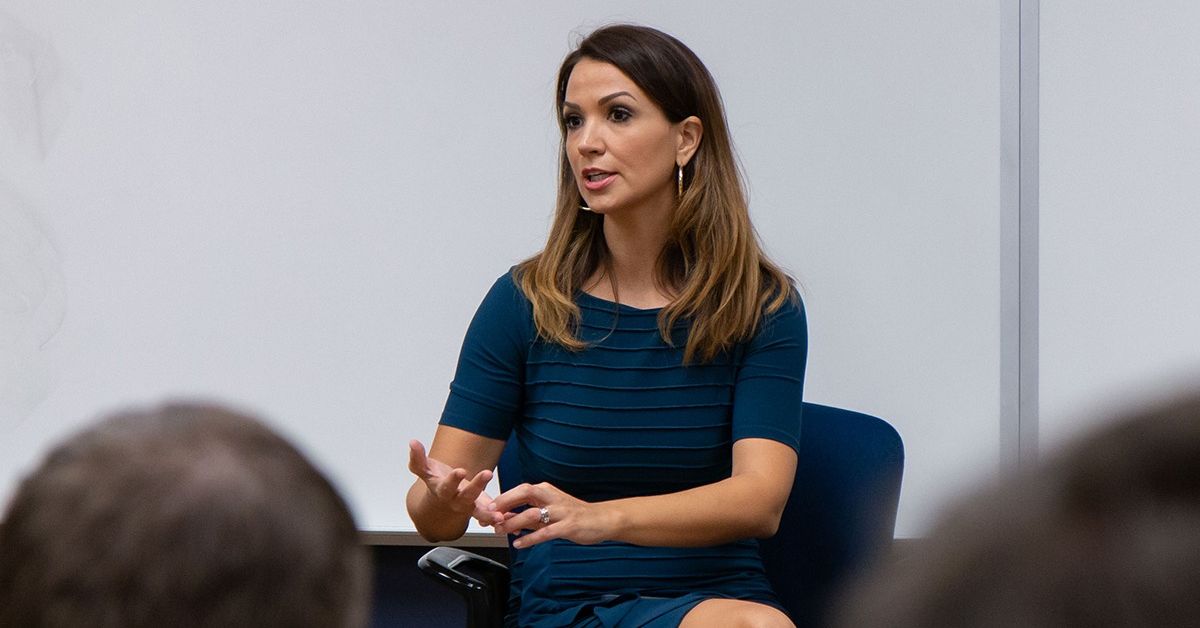
Rebeccah Heinrichs age is a topic that draws steady interest from people who follow national security commentary and want to understand the background of the voices shaping today’s defense conversations. Rebeccah L. Heinrichs is widely recognized as a defense analyst and national security expert, best known for her work as Senior Fellow at Hudson Institute and Director of the Keystone Defense Initiative.
Based on available records, her estimated age is 38–39, with a birth year placed around 1986–1987. She is American, holds degrees from Ashland University, US Naval War College, and Missouri State University, and has built a career centered on missile defense, nuclear strategy, and U.S. foreign policy. This overview covers her background, education, career path, and the reasons her age and credibility continue to generate public curiosity.
Quick Facts About Rebeccah Heinrichs
Before going deeper into her background, it helps to see the essential details in one place.
| Detail | Information |
| Full Name | Rebeccah L. Heinrichs |
| Estimated Age | 38–39 years |
| Birth Year | Estimated 1986–1987 |
| Nationality | American |
| Profession | Defense analyst, national security expert |
| Current Role | Senior Fellow, Hudson Institute |
| Other Role | Director, Keystone Defense Initiative |
| Education | Ashland University, US Naval War College, Missouri State University |
| Family | Married, five children |
| Known For | Missile defense, nuclear strategy, strategic deterrence |
Early Life and Background
Rebeccah Heinrichs’ early life laid the groundwork for a career centered on national security and defense policy. While detailed public records about her childhood remain limited, what is clear is that her academic path and career choices reflect a long-standing interest in international affairs, government, and strategic thinking. This interest eventually shaped her into one of the more recognizable voices in defense policy circles today.
Foundations of a National Security Voice
Many national security experts trace their interest in defense strategy back to formative academic experiences, and Heinrichs fits this pattern closely. Her progression from undergraduate political science studies to advanced military education shows a deliberate, focused approach to building expertise in geopolitical analysis and defense systems. This kind of structured educational path is common among analysts who go on to work with think tanks and policy research organizations.
Read more: Jack Hartmann Net Worth 2026: How He Built Millions
Education: The Building Blocks of Expertise

Rebeccah Heinrichs education reflects a combination of civilian academic training and specialized military strategic study, which together support her authority in national security discussions.
Ashland University – Political Science Foundations
Heinrichs began her academic journey at Ashland University, where she studied political science. Ashland University political science programs typically emphasize government structures, policy analysis, and international relations, giving students a strong base for careers in public policy or defense-related fields. This foundation gave her the analytical tools needed to later specialize in more technical areas like missile defense and nuclear strategy.
US Naval War College – Advanced Strategic Training
Her time at the US Naval War College marks a significant point in her academic history. The United States Naval War College is a highly respected institution that trains military officers and civilian defense professionals in strategic thinking, warfare theory, and national security policy. Attending this institution signals a serious commitment to understanding defense strategies at an advanced level, well beyond standard university coursework.
Missouri State University – Graduate Studies
Heinrichs also pursued graduate studies at Missouri State University. Graduate-level education at this stage typically deepens a student’s ability to conduct policy research, write policy briefs, and engage in more rigorous geopolitical analysis. Combined with her earlier training, this rounded out her academic preparation for a career focused on nuclear strategy and defense policy.
Professional Career: From Academia to Influence

Rebeccah Heinrichs career achievements center on her transition from academic study into influential policy work, where she has become a respected think-tank analyst.
Hudson Institute – Senior Fellow & Director
As Senior Fellow at Hudson Institute, Heinrichs contributes research and analysis on missile defense, nuclear capabilities, and strategic deterrence. Hudson Institute is a policy research organization known for its work on defense policy, international relations, and public policy issues affecting U.S. foreign policy decisions. Alongside this role, she serves as Director of the Keystone Defense Initiative, a program focused on addressing emerging threats to U.S. national security through evidence-based research and policy recommendations.
Adjunct Professor – Shaping Future Leaders
Beyond her think-tank work, Heinrichs has also served as an Adjunct Professor, notably associated with the Institute of World Politics. Teaching allows her to pass on her expertise in national security and defense strategies to the next generation of policy analysts, extending her influence beyond published research into direct mentorship and education.
Media Presence and Public Influence
Her media presence adds another layer to her public profile. Heinrichs has appeared as a Fox News commentary contributor, provided PBS defense expert commentary, and participated in CNBC national security segments. These appearances allow her to translate complex defense policy topics into accessible discussions for general audiences, which has strengthened her public recognition well beyond academic and government circles.
Read more: Mattress Mack Net Worth: How Jim McIngvale Built $300M
Areas of Expertise

Understanding Heinrichs’ specific areas of expertise clarifies why her insights carry weight in high-level policy discussions.
Key Expertise Areas
Her professional focus spans several interconnected areas of national security and defense policy:
- Missile defense systems and technology
- Nuclear strategy and nuclear capabilities
- Strategic deterrence theory
- U.S. foreign policy and defense policy
- Global security threats and geopolitical tension
- International relations and international affairs
Why Her Expertise Matters
These areas of expertise matter because they sit at the center of ongoing global conflicts and geopolitical tension. As nuclear capabilities and missile defense systems evolve worldwide, analysts like Heinrichs provide government officials and the public with grounded, evidence-based approaches to understanding emerging threats to U.S. national security. Her strategic thinking helps translate complex defense systems into policy analysis that decision-makers can actually use.
Recognition and Impact
Rebeccah Heinrichs influence within policy circles stems from consistent, evidence-based contributions to national security discussions over an extended career.
Key Contributions
Her contributions to the field include:
- Research and policy briefs on missile defense and nuclear strategy
- Public commentary translating defense policy for broader audiences
- Direct engagement with government officials on strategic deterrence
- Academic mentorship through her adjunct teaching role
- Leadership of the Keystone Defense Initiative at Hudson Institute
Influence in Policy Circles
Heinrichs’ influence in policy circles is reflected in her consistent presence at the intersection of academic research, media commentary, and direct policy engagement. This combination is relatively rare, since many analysts specialize in only one of these areas. Her ability to move between research, teaching, and public commentary has helped establish her as a trusted voice on national security and defense policy.
Family and Personal Life

On a personal level, Heinrichs is married and raising five children, balancing a demanding career in national security with family life. She is also known to bring a Christian perspective to her work, which shapes her approach to ethical decision-making in policy discussions surrounding defense and global conflicts. While her professional life is well documented, she generally keeps her personal life more private, with family details being some of the few personal facts publicly known.
Read more: Zach Justice Age: The Timeline Behind His Success
Why People Search for Rebeccah Heinrichs Age
Public curiosity about Rebeccah Heinrichs age often stems from a broader interest in understanding the people behind influential national security commentary.
Key Reasons for Interest
People typically search for this information for a few common reasons:
- To understand how experience relates to expertise in defense policy
- To learn more about her career timeline and achievements
- To satisfy general curiosity after seeing her in media appearances
- To research her background before citing her work professionally
Age and Professional Credibility
Age is often used as a quick, informal way to gauge professional credibility, though it isn’t always the most accurate measure. In Heinrichs’ case, her estimated age of 38–39 places her in a career stage where she has accumulated substantial experience through education, teaching, think-tank research, and media appearances, without being viewed as a newcomer to the field. Her professional credibility ultimately rests more on the depth of her work in missile defense and nuclear strategy than on age alone, but the two together help paint a fuller picture for readers trying to understand her standing in national security discussions.
Conclusion
Rebeccah L. Heinrichs has built a respected career as a defense analyst and national security expert, supported by strong academic training at Ashland University, US Naval War College, and Missouri State University. Her current work as Senior Fellow at Hudson Institute and Director of the Keystone Defense Initiative, combined with her media presence and teaching role, has solidified her influence in policy circles. While her estimated age of 38–39 draws search interest, it is her consistent, evidence-based contributions to missile defense, nuclear strategy, and U.S. foreign policy that continue to define her professional credibility and public recognition.