Have you ever received a text that simply says “FR” and thought, “Wait, what does that mean?” You’re not alone. These two little letters show up everywhere in modern texting. In most cases, FR means “for real.” People use it to show they’re serious, agree with you, or genuinely mean what they say. Sometimes, though, it can turn into a question. That’s where the context matters.
The fr meaning in chat becomes much easier when you see it in action. You might spot FR in text messages, group chats, DMs, or social media comments. A friend may reply “FR” to show strong agreement. Someone might ask “FR?” when they want to know if you’re serious. You’ll also see “me fr” under relatable memes and videos. It’s quick, casual, and easy to use. However, it doesn’t work equally well in every conversation or social setting.
You Saw It and Got Confused, Right?
Seeing “FR” in a message can leave you scratching your head. It looks like two random letters until you know the slang behind them.
In most texting and online conversations, FR means “for real.” It shows that someone is being honest, serious, or strongly agreeing with another person.
The fr meaning in chat can change slightly based on the situation. Sometimes it adds emphasis to a statement. Other times, it works as a quick reaction.
You might see FR at the end of a sentence, by itself, or with a question mark.
- FR = For real
- FR? = Are you serious?
- Me fr = This describes me perfectly
- FRFR = For real, for real
For example:
Alex: “That movie was way better than I expected.”
Sam: “FR. I loved it.”
Here, Sam uses FR to show agreement. It doesn’t need a long explanation.
The term has become common text slang across social media and casual messages. Still, context matters because not every audience understands internet slang in the same way.
Here’s What FR Actually Does in a Conversation
FR meaning in chat does more than shorten the words “for real.” It adds emotional weight to a message without making the conversation sound formal.
When someone writes FR, they usually want to stress honesty or agreement. It can make a simple statement feel more genuine and personal.
For example, saying “I’m tired” gives basic information. Adding FR makes the feeling stronger.
“I’m exhausted FR.”
That small addition tells the reader that the speaker genuinely feels exhausted. It acts almost like verbal emphasis in a spoken conversation.
FR meaning in chat can also work as a solo reply. You don’t need a full sentence when the context already explains everything.
- Agreement: “That test was brutal.” → “FR.”
- Emphasis: “I need a vacation FR.”
- Confirmation: “You really quit?” → “FR?”
- Relatability: “Me FR.”
- Sincerity: “You looked great tonight FR.”
Here’s another simple conversation:
Mia: “I could sleep for twelve hours.”
Jake: “FR. Same.”
In this case, FR supports the agreement. It keeps the conversation casual while showing genuine feelings.
Read More : 300+ Funny Names That Start With N (You’ll Actually Use)
Where You’ll Actually See People Using It
FR appears almost anywhere people have casual digital communication. You’ll find it in messages, social media comments, captions, and quick online reactions.
The platform doesn’t usually change the basic meaning. However, the way people use FR can shift with the setting.
On Instagram, someone might comment FR under a relatable post. On TikTok, users often pair it with memes or videos that describe everyday experiences.
You can also see it on Snapchat, WhatsApp, Twitter, and other online platforms.
Common places include:
- Text messages
- Group chats
- Instagram comments
- TikTok comments
- Snapchat replies
- WhatsApp messages
- DMs
- Social media captions
- Meme comments
- Casual online conversations
For example:
Friend 1: “We seriously need a vacation.”
Friend 2: “FR 😭”
The response feels quick and natural. There’s no need to explain the agreement.
You may also see “me fr” under relatable content.
TikTok caption: “When you open your phone and forget why.”
Comment: “Me fr.”
Here, the phrase shows identification rather than simple agreement. The person sees themselves in the content.
Read More : Tayla Lynn Net Worth 2026: Country Legacy & Success Story
Why Tone Changes Everything
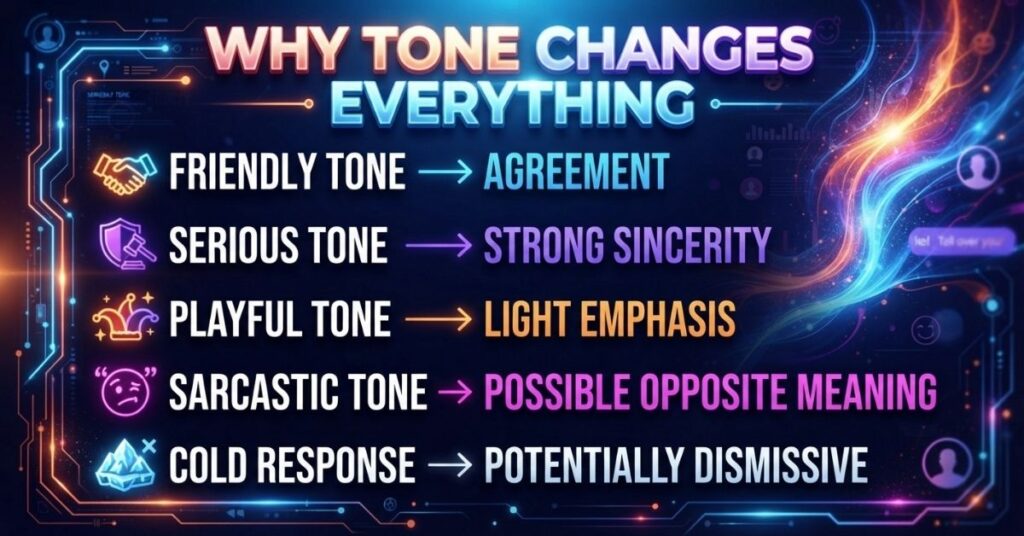
Two letters can carry different feelings depending on tone, timing, and context. That’s why fr meaning in chatdoesn’t always sound exactly the same.
With close friends, FR usually feels relaxed. You can use it freely because your communication style already feels familiar.
With someone you’re getting to know, however, a one-word FR might seem too casual. It could even sound like a dismissive response.
Romantic texting adds another layer. Someone might write:
“You’re actually funny FR.”
That can show genuine interest. Still, fr meaning in chat alone doesn’t prove someone is flirting. Look at the whole conversation.
Sarcasm can also change the meaning. Written messages don’t include facial expressions or voice tone. As a result, readers may interpret the same words differently.
- Friendly tone → agreement
- Serious tone → strong sincerity
- Playful tone → light emphasis
- Sarcastic tone → possible opposite meaning
- Cold response → potentially dismissive
For example:
“Great idea FR.”
Depending on the context, this could be genuine praise or sarcasm. Emojis and surrounding words often provide useful clues.
Times When FR Makes You Look Bad
FR works best in casual communication. Some situations need clearer and more respectful language.
A quick “FR” might feel harmless among friends. However, sending it in a formal email can make your message sound careless.
Think about your audience before using internet slang. Your workplace, teacher, older relatives, or professional contacts may not understand it.
Avoid FR when:
- Writing a formal work email
- Contacting a teacher about an important issue
- Discussing serious news
- Responding to someone’s grief
- Speaking with someone unfamiliar with text slang
- Writing an official message or report
Consider this example:
Coworker: “Can you confirm the report is finished?”
Poor choice: “FR, it’s done.”
Better: “Yes, I finished the report.”
The second response sounds clearer and more professional.
The same rule applies to serious personal conversations. If someone shares a painful experience, a simple “FR” may feel emotionally distant.
Good digital communication isn’t only about knowing slang. It’s also about knowing when not to use it.
Other Ways to Say the Same Thing
FR isn’t the only way to show agreement, honesty, or strong emphasis. Several slang alternatives can express a similar idea.
Your choice depends on the audience and communication style. Some expressions sound playful, while others feel more intense.
Casual alternatives
- No cap — I’m being completely honest.
- Facts — I strongly agree.
- Deadass — I’m being very serious.
- FRFR — I’m emphasizing that something is genuinely true.
Clearer alternatives
- Seriously
- Honestly
- I mean it
- Actually
- I’m not even joking
Playful alternatives
- For real for real
- On God
- Me fr
- FRFR
For example:
A: “That burger was incredible.”
B: “Facts.”
Or:
A: “You really want to quit your job?”
B: “Deadass.”
These expressions overlap with FR, but they don’t always carry the exact same tone. Facts focuses more on agreement. Deadass sounds stronger. No cap focuses heavily on honesty.
Knowing these differences helps you choose the right slang for each conversation.
What It Looks Like in Real Messages
The easiest way to understand FR is to see it in actual text messages. Its meaning becomes clearer when you look at the words around it.
Showing agreement
A: “Mondays should be illegal.”
B: “FR.”
Here, FR simply means “I completely agree.”
Showing emphasis
A: “I need coffee FR.”
The speaker isn’t just mentioning coffee. They want to stress how badly they need it.
Asking for confirmation
A: “You’re moving to Japan?”
B: “FR?”
Here, the question mark matters. FR? means something like “Really?” or “Are you serious?”
Showing genuine interest
A: “Had a great time tonight.”
B: “FR. I did too.”
Showing relatability
TikTok: “When you forget why you walked into a room.”
Comment: “Me fr.”
The commenter identifies with the situation.
Showing strong emphasis
A: “I’m never staying up that late again.”
B: “FRFR.”
The repeated FR adds extra emphasis. In casual texting, people sometimes even stretch it further with FRFRFR, although that can look playful or exaggerated.
A Bit of History (And Why It Matters)
FR didn’t appear from nowhere. The expression comes from the spoken phrase “for real,” which people have used to express honesty, seriousness, and agreement.
Over time, texting shorthand made it easier to turn longer expressions into quick abbreviations. FR became a natural fit for fast digital communication.
Internet culture helped the term spread even further. Social media platforms reward short reactions, especially when users scroll quickly through large amounts of content.
Twitter, Instagram, and TikTok helped make short expressions more visible. Today, FR appears in comments, DMs, captions, memes, and everyday messages.
The term also connects with broader speech patterns and slang traditions, including usage in Black American communities. Understanding that background adds useful context to modern internet slang.
Younger people, especially teens and people in their twenties, often use FR naturally. Millennials and Gen X may use it too, although usage varies from person to person.
FR now appears in many English-speaking spaces. Non-English speakers may also recognize it through social media and global internet culture.
The important point is simple: FR has moved from spoken language into everyday texting shorthand. Its meaning remains rooted in sincerity, truth, and genuine emphasis.
H2: Questions People Actually Ask
Is FR rude to use?
No, FR isn’t usually rude in casual chats with friends or familiar people.
However, the fr meaning in chat can sound dismissive during serious conversations.
Does it mean the same thing everywhere?
FR usually means for real, but its tone can change with context, audience, and timing.
The fr meaning in chat may show agreement, emphasis, sincerity, or confirmation.
Should I use FR in professional messages?
It’s better to avoid FR in formal emails, workplace messages, reports, or communication with teachers.
Use clear words instead, especially when professionalism and accuracy matter.
What’s the difference between FR and FRFR?
FR means for real, while FRFR adds stronger emphasis to show serious honesty or strong agreement.
FRFR basically means for real, for real, making the statement feel more intense.
Can older people use FR without seeming weird?
Yes, older people can use FR naturally when it fits their usual texting style and audience.
The fr meaning in chat stays the same, but forced slang may feel unnatural.
Read More : Funny Names That Start With S You’ll Truly Adore Today
That’s Pretty Much It
FR may look like a simple abbreviation, but using it well takes a little context. It’s more than shortening for real. It shows that you genuinely mean what you’re saying in a relaxed way. Pay attention to who you’re talking to and the mood of the conversation. Use FR when it feels natural and fits the moment. If it feels forced, just say what you mean instead.