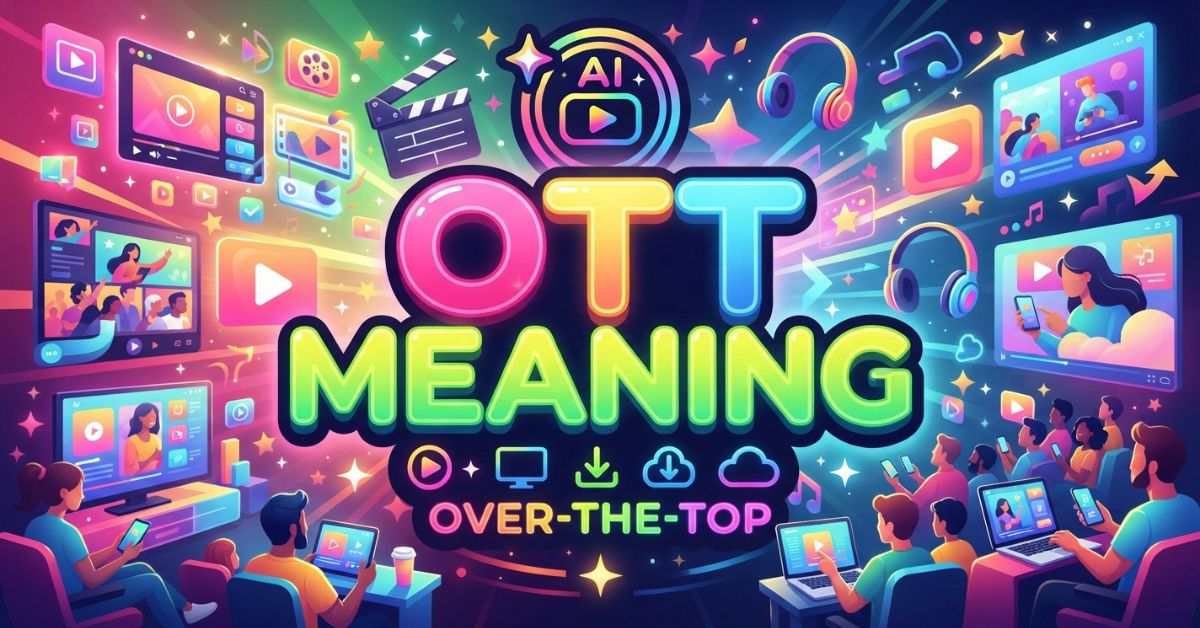
OTT usually means “over the top.” In texting and everyday conversation, people use it to describe something excessive, exaggerated, dramatic, or more intense than necessary. For example, if someone throws an enormous birthday party for a small celebration, you might call it “OTT.”
However, OTT Meaning has another major meaning. In technology and entertainment, OTT refers to content delivered through the internet instead of traditional cable or satellite television. Services such as Netflix and other streaming platforms fall into this category.
So, what does OTT mean in your message? The surrounding words usually give you the answer.
Probably Why You Searched This
You probably saw “OTT” in a text, comment, or social media post and wondered what those three letters meant.
Maybe someone wrote, “That reaction was so OTT.” Or perhaps you saw “OTT platform” while reading about streaming services. Both uses are correct, but they point to different ideas.
In casual texting, OTT meaning generally is:
- Excessive
- Overdramatic
- Exaggerated
- Extreme
- Too much
- More elaborate than necessary
Cambridge Dictionary defines OTT meaning as an informal abbreviation of “over the top” and identifies it as a UK usage. The related phrase describes something excessively extreme or demanding too much attention or effort.
For instance:
“You sent 20 messages because I didn’t reply for five minutes. That’s OTT.”
Here, the speaker isn’t talking about television. They’re saying the reaction feels excessive.
What’s Really Going On When People Say It
The phrase “over the top” describes something that goes beyond what seems normal, suitable, or necessary. OTT meaning simply turns that longer expression into a quick abbreviation.
Imagine a friend bringing a three-tier cake to a casual movie night. You might laugh and say, “That’s a little OTT.”
The word can describe far more than behavior, though. People use it for:
- Outfits
- Parties
- Reactions
- Decorations
- Gifts
- Performances
- Movies
- Personalities
- Social media posts
- Emotional responses
The meaning also depends heavily on tone. Collins describes OTT as meaning exaggerated and extreme, with synonyms such as over-the-top, exaggerated, overblown, and excessive.
Sometimes OTT sounds critical. Other times, it sounds admiring.
“That apology was OTT” suggests someone went too far.
“Her wedding was completely OTT, and I loved every second” praises the extravagance.
That’s the little twist that makes OTT more interesting than a simple synonym for “bad.”
How It Shows Up in Real Conversations
OTT meaning fits naturally into casual digital communication when people want to describe something exaggerated without writing a long explanation.
In Text Messages
You might see:
“Your reaction was seriously OTT.”
The speaker thinks the reaction went too far.
In Group Chats
Friends may use OTT when someone turns a tiny problem into a dramatic event.
“He left the group for one hour and wrote a whole goodbye speech. OTT 😂”
The humor comes from the exaggeration.
On Social Media
People can use OTT meaning is to describe dramatic outfits, elaborate celebrations, flashy videos, or attention-grabbing content.
“That outfit is OTT, but honestly, I love it.”
Here, OTT isn’t necessarily an insult. The second half makes the positive attitude clear.
In Everyday Conversation
The abbreviation can also appear when discussing movies, performances, parties, or decorations.
“The special effects were so OTT.”
That could mean the effects felt wildly exaggerated rather than realistic.
Read More : Funny Zodiac Sign Names That’ll Make You Laugh Out Loud
Context Is Everything: When the Vibe Shifts
One short acronym can sound completely different depending on who sends it.
Among close friends, OTT often feels playful. A friend might call your elaborate birthday plans OTT meaning while secretly admiring the effort.
With someone you barely know, the same comment can sound judgmental. Saying “Your outfit is OTT” without any other context may feel like criticism.
Tone becomes especially important online because text removes facial expressions and voice cues.
Consider these two messages:
“That cake is OTT 😂”
“That cake is OTT.”
The first sounds playful because the emoji softens the statement. The second could sound more critical.
Regional usage matters, too. OTT has particularly strong roots in British informal English, where people commonly use it to describe something exaggerated or excessive.
American speakers may understand OTT easily, although words such as “extra,” “too much,” or “doing the most” can feel more natural in casual US conversations.
Don’t Use OTT Here (Trust Me)
OTT meaning works best in informal situations. Some conversations need a more careful choice of words.
Avoid using it when someone is discussing a genuinely painful or serious situation. Calling someone’s emotional response “OTT” can make them feel dismissed.
It’s also not the best choice for formal communication.
For example, telling your manager:
“Your instructions are OTT.”
could sound rude or immature.
The same applies to teachers, clients, supervisors, and professional emails. In those situations, choose a clearer and more neutral word.
You should also think twice before calling a stranger’s appearance or behavior OTT. Without friendly context, the comment can easily sound insulting.
A simple rule works well: use OTT when the situation is casual and the other person can understand your tone.
Better Words for Different Situations
Sometimes OTT isn’t quite the word you’re looking for. The following alternatives can help you match your meaning more precisely.
| Situation | Better word or phrase |
|---|---|
| Friendly teasing | Extra |
| Something excessive | Too much |
| Playful exaggeration | Doing the most |
| Very elaborate | Elaborate |
| Strong criticism | Excessive |
| Something dramatically exaggerated | Overblown |
| Very luxurious | Extravagant |
| Professional description | Extensive |
| Something understated | Subtle |
| Minimal style | Simple |
The best alternative depends on what you actually want to say.
For example, “extra” often sounds lighter and more playful in American English. “Excessive” sounds more formal and critical. Meanwhile, “extravagant” can suggest luxury rather than unnecessary behavior.
Examples Actual Messages People Send
Real examples make the meaning much easier to understand.
Example 1
“You made a PowerPoint for our movie night? That’s OTT 😂”
Meaning: The effort feels hilariously excessive.
Example 2
“Her birthday decorations were completely OTT.”
Meaning: The decorations were extremely elaborate.
Example 3
“You’re being a little OTT about a five-minute delay.”
Meaning: The person is reacting more strongly than the situation seems to require.
Example 4
“That dress is OTT, but it looks amazing.”
Meaning: The dress is bold or extravagant, with a positive undertone.
Example 5
“The ending was so OTT that I couldn’t stop laughing.”
Meaning: The ending became ridiculously dramatic.
Example 6
“Your apology was OTT. You didn’t need to write three pages.”
Meaning: The apology went far beyond what the situation required.
Notice how the basic meaning stays consistent while the attitude changes. Context does most of the heavy lifting.
Platform Quirks and Regional Differences
OTT doesn’t have exactly the same flavor everywhere.
In British English, OTT is a familiar informal abbreviation for “over the top.” Major English dictionaries specifically label this usage as British or UK informal.
In American online conversations, people may use OTT, but extra, over-the-top, or doing the most can sometimes sound more natural.
Social media also changes which expressions people prefer. On platforms such as TikTok and Instagram, users frequently rely on short phrases that quickly communicate attitude. OTT can fit that style when someone wants to describe dramatic or exaggerated content.
The technology meaning creates another layer of confusion.
When you see “OTT platform,” the writer usually means an internet-based media service rather than slang. Streaming services deliver content over internet connections rather than relying on traditional cable or satellite distribution.
So:
“That outfit is OTT.”
Usually means the outfit is excessive or dramatic.
“Netflix is an OTT service.”
Refers to internet-delivered entertainment.
Same abbreviation. Completely different context.
Read More : Funny Names For Injuries That’ll Make You Laugh
Where People Get Confused
The biggest mistake is assuming OTT always means “too much” in a negative way.
That’s not necessarily true.
Someone can describe something as OTT while admiring its boldness. A glamorous wedding, spectacular outfit, or extravagant gift might be OTT in a very positive sense.
Another common confusion involves the slang and streaming meanings. The phrase “OTT platform” almost always signals the technology meaning. A sentence about someone’s reaction, clothing, or behavior usually points toward the slang meaning.
There are also obscure uses of OTT across different communities. Some slang databases list additional interpretations, but these aren’t nearly as universal as “over the top.”
That’s why context should come before assumptions.
Your Burning Questions Answered About “OTT” Term
Is calling something OTT rude?
Not necessarily. Among friends, OTT can sound playful, but in serious or unfamiliar settings, it may sound critical.
Can OTT be a compliment?
Yes. OTT can praise something bold, extravagant, glamorous, or impressively elaborate when the surrounding tone is positive.
Does OTT mean the same thing everywhere?
The core slang meaning stays similar, but usage varies by region. It has particularly strong informal usage in British English.
Is “Oyt” a real variant of OTT?
No. “Oyt” isn’t a standard spelling or recognized variant of OTT meaning “over the top.” It may simply be a typo or autocorrect error.
When did people start using OTT for streaming?
The technology industry adopted OTT as a term for internet-delivered media as online video developed as an alternative to traditional television distribution.
Can I use OTT in work emails?
Usually, it’s better to avoid it in formal work emails. Use clearer terms such as “excessive,” “elaborate,” or “extensive.”
Why does OTT sound British?
OTT has a well-established place in British informal English, and major dictionaries label the slang abbreviation as UK or British informal.
Is there a difference between OTT and extra?
Yes. Both can describe something excessive, but extra often sounds more playful in American slang, while OTT can carry a stronger sense of exaggeration.
Read More : Elizabeth Huberdeau: The Untold Story of John Cena’s Ex-Wife
Wrapping This Up
OTT usually means “over the top.” In texts, chats, and social media, it describes something exaggerated, excessive, dramatic, or unusually elaborate.
The tone decides whether that meaning feels negative, humorous, or complimentary. If a friend says your birthday plans are OTT, they might be teasing you. If someone says your reaction was OTT during a serious conversation, they may be criticizing you.
Then there’s the technology meaning. In phrases such as “OTT platform” or “OTT service,” the acronym refers to internet-delivered media rather than exaggerated behavior.
When you’re unsure, look at the words around OTT. A message about behavior usually points to “over the top.” A discussion about Netflix, streaming, or online video usually points to the technology meaning.
In short, OTT is all about context. Once you spot that context, those three letters become pretty easy to decode.