Ever received a text saying “You’re so OTT” and wondered what they ott meaning slang? It sounds simple, but this tiny slang term can carry different tones. In casual chats, OTT usually describes something too dramatic, excessive, or simply a bit much. It might describe a reaction, outfit, joke, story, or even a long string of voice messages. Sometimes friends use it to tease you. Other times, it can sound like criticism.
OTT comes from “Over The Top.” In texting, it can mean “extra,” “doing the most,” or “overdone.” The context matters a lot. For example, “Your reaction is OTT” may mean you’re overreacting. But “That party was OTT, and I loved it!” sounds more like a compliment. Once you know the tone, the meaning becomes much easier to understand. This guide breaks down how people use OTT in texts, group chats, social media, and everyday conversations.
What’s Really Going On When People Say It
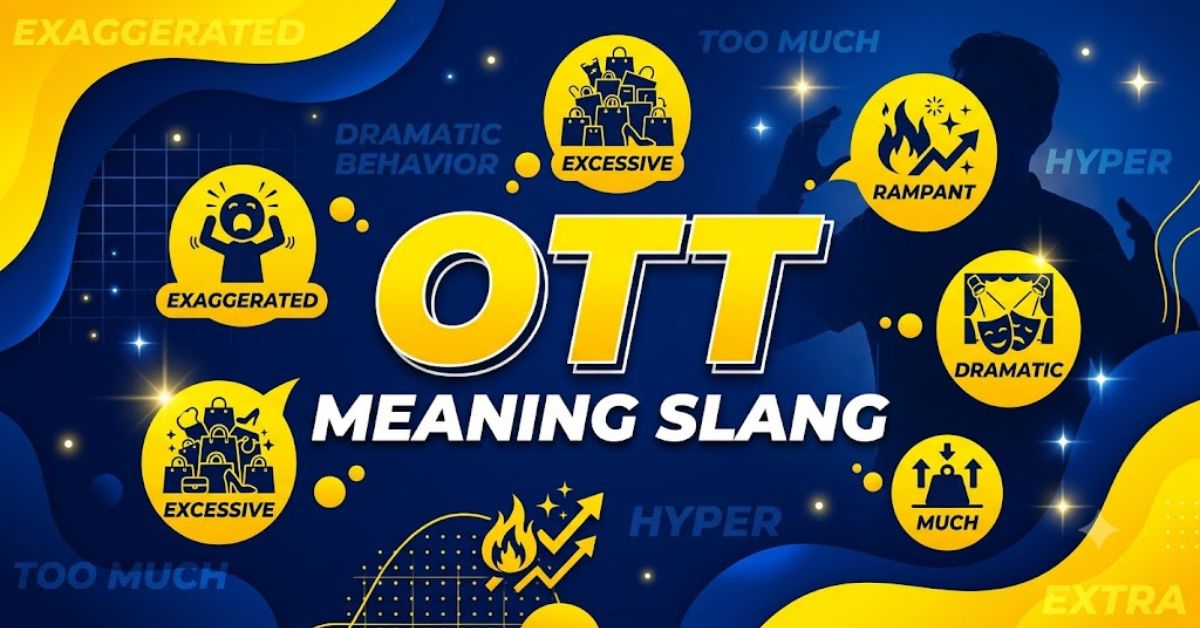
When someone says “OTT” in a text, they usually mean Over The Top. It describes something that feels excessive, dramatic, or more than necessary.
The ott meaning slang users see in chats often depends on the situation. It can describe a reaction, outfit, joke, story, or even a long message.
People may use OTT to mean:
- Too dramatic
- A bit much
- Extra
- Doing the most
- Overdone
- Excessive
For example, a friend might text, “That reaction was so OTT 😂.” They probably aren’t seriously attacking you. They may simply be teasing you.
However, OTT and ott meaning slang can also sound critical. “Your response was OTT” may suggest that someone reacted too strongly.
So, don’t judge the word alone. Look at the surrounding message, emojis, and tone.
How It Shows Up in Real Conversations
OTT appears most often in casual communication. You may see it in text messages, group chats, comments, or social media posts.
Friends often use it when someone goes far beyond what a situation requires. Imagine someone writing five paragraphs after a friend says, “Okay.” That could easily earn an “OTT” reply.
Here are common situations:
- A dramatic reaction
- An elaborate outfit
- A very long apology
- Too many emojis
- An over-the-top celebration
- A story with too many details
Conversation example:
Alex: “I sent her 12 voice messages about my bad day.”
Sam: “That’s a little OTT 😂”
Here, Sam probably means “That’s a bit much.”
Still, the meaning can change with the relationship. Close friends may use OTT or ott meaning slang playfully. Strangers might use it as criticism.
Read More : SFLR Meaning: What It Means in Texts and Why People Use It
Context Is Everything: When the Vibe Shifts
The same three letters can feel friendly or harsh. Context makes the difference.
Pay attention to who says OTT or ott meaning slang, what happened, and how they phrase it. Emojis can also soften the message.
For example:
“Your birthday setup is OTT 😂”
This may sound playful.
But:
“Your reaction is OTT.”
That version sounds more critical.
OTT can also work as a compliment. Someone might say your party was “OTT but amazing.” They mean you went all out, and they enjoyed it.
Watch for these clues:
- Laughing or smiling emojis suggest teasing.
- “A bit OTT” often sounds mild.
- “Way too OTT” sounds more critical.
- “OTT in the best way” usually signals praise.
- A short, cold reply may carry a negative tone.
When sarcasm enters the conversation, things get trickier. Text removes facial expressions and voice cues. That’s why context matters so much.
Don’t Use OTT Here (Trust Me)
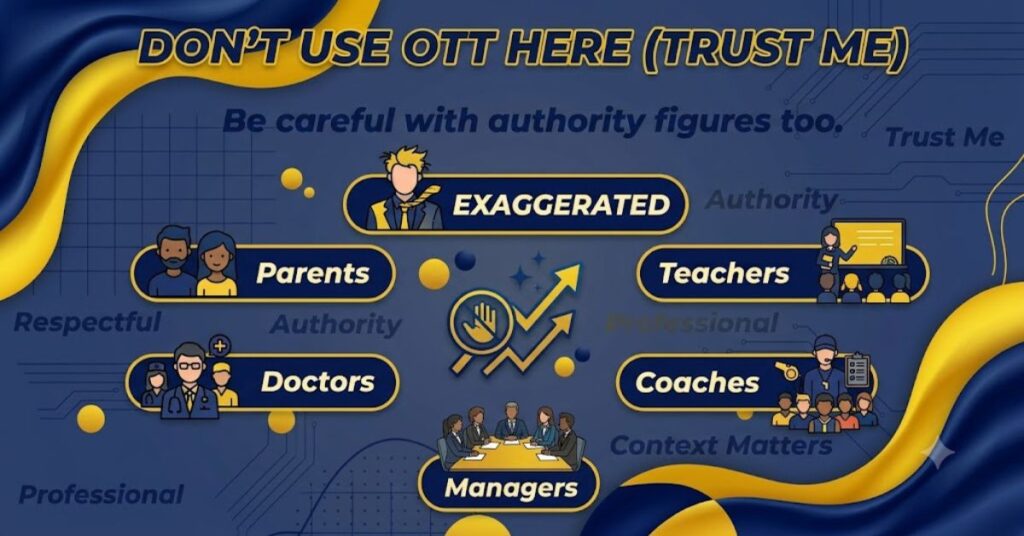
OTT works well in casual chats. However, some situations call for clearer and more respectful language.
Work emails are one example. Calling your manager’s detailed report “OTT” could sound dismissive. Professional writing usually benefits from direct wording.
You should also avoid OTT during serious conversations. Someone discussing grief, family problems, or another painful issue may not appreciate being called dramatic.
Be careful with authority figures too.
- Parents
- Teachers
- Doctors
- Coaches
- Managers
For example, telling a teacher, “Your rules are OTT,” may sound disrespectful.
The same applies to apologies. Saying, “Sorry my message was OTT” can make the apology feel less sincere.
Instead, choose clearer words:
At work: “That was very detailed.”
During a serious talk: “I understand how you feel.”
In an apology: “I’m sorry for overreacting.”
Simple language often works better than slang when feelings or respect matter.
Better Words for Different Situations
OTT isn’t always the best choice. Sometimes another word explains your meaning more clearly.
For casual conversations, “extra” works well. It often sounds playful and less critical.
You can also say “doing the most” when someone seems to be trying too hard.
Other useful alternatives include:
- A bit much — mild and casual
- Overkill — more negative
- Overdone — useful for style or presentation
- Excessive — direct and formal
- Elaborate — usually neutral or positive
- Thorough — positive when someone covers everything
- Detailed — neutral and professional
- Extensive — formal and descriptive
Conversation example:
Mia: “I decorated my room for one movie night.”
Lena: “That’s extra!”
If you want to sound kinder, say, “That’s elaborate.” If you want to criticize the effort, “That feels like overkill” sounds stronger.
The right word depends on your relationship and intention. Think about the message you want to send before choosing the slang.
Read More : Who Is Dallas Yocum? The Untold Story of Mike Lindell’s Short-Lived Wife
Examples Actual Messages People Send
Real examples make OTT much easier to understand. The phrase can sound different depending on the situation.
Example 1: A dramatic reaction
Jake: “She didn’t reply for ten minutes.”
Noah: “Bro, you’re being OTT 😂”
Here, OTT means the reaction seems excessive.
Example 2: An impressive event
Sara: “Her wedding had fireworks, dancers, and a live band.”
Emma: “That sounds so OTT!”
This could express surprise or admiration.
Example 3: A long message
Tom: “I wrote three pages explaining why I missed his call.”
Ryan: “That apology was OTT.”
Ryan thinks Tom went too far.
Example 4: Social media
Lily: “I wore a full glam outfit to buy groceries.”
Maya: “OTT, but honestly iconic.”
That message mixes criticism with praise.
These examples show why tone matters. OTT doesn’t automatically mean something bad. The surrounding words reveal the speaker’s real intention.
Platform Quirks and Regional Differences
OTT can appear across many platforms, but people don’t always use it in exactly the same way.
On TikTok and other social media, users may prefer phrases like “extra” or “doing the most.” In private texting, OTT can feel more natural among people who already know the expression.
Regional English also matters.
In British English, OTT commonly means excessive or exaggerated. Australian English uses the phrase in a similar way. In American slang, “extra” often feels more common in casual conversations.
You may also encounter other meanings in specific communities:
- Texting/SMS: excessive or dramatic
- Group chats: playful teasing
- Social media: exaggerated behavior
- K-pop: “OTT” may refer to IVE’s song title
- German street slang: “Ott” can have a separate meaning
That German usage connects to Turkish language influence. It has nothing to do with the usual English slang meaning.
Always check the community and context before assuming what OTT means.
Where People Get Confused
The biggest problem with OTT is that it has more than one common meaning.
In texting, OTT usually describes something excessive or dramatic. In technology, OTT platforms refer to services that deliver media through the internet.
That’s why a sentence about Netflix can mean something completely different.
“Your reaction was OTT.”
Here, OTT describes behavior.
“Netflix is an OTT service.”
Here, OTT describes internet content delivery.
People also confuse OTT with similar slang. It isn’t exactly the same as “extra,” “overkill,” or “doing the most.” These expressions overlap, but their tone can differ.
Another common mistake involves sarcasm. Someone might say, “Wow, that’s OTT 😂” while actually praising your effort.
Remember these simple clues:
- Check the topic.
- Read the full message.
- Look at emojis.
- Consider the relationship.
- Notice whether the speaker sounds serious.
Once you understand the context, OTT becomes much easier to read.
Read More : What Does BYW Mean? Is It a Typo or Real Slang?
Your Burning Questions Answered About “OTT” Term
Is calling something OTT rude?
The ott meaning slang can sound rude when used harshly, especially with strangers. Friends may use it playfully without causing offense.
Can OTT be a compliment?
Yes, OTT can be a compliment when praising something bold, elaborate, or impressive. Context and tone decide the intended meaning.
Does OTT mean the same thing everywhere?
No. The ott meaning slang varies by region and context. British English often uses it more than American slang does.
Is Oyt a real variant of OTT?
No. Oyt is generally considered a typo or autocorrect mistake, not a recognized variant of OTT in standard texting slang.
When did people start using OTT for streaming?
People began using OTT for streaming in the early 2000s as internet video services started challenging traditional cable television systems.
Can I use OTT in work emails?
Not usually. OTT sounds casual in work emails, so professional writing should use clearer terms like excessive, detailed, or extensive instead.
Why does OTT sound British?
OTT can sound British because British English uses the phrase frequently, especially in everyday speech, media, and British tabloids.
Is there a difference between OTT and extra?
Yes. Extra often sounds playful, while OTT can suggest something excessive or dramatic. Their meanings overlap, but tone can differ.
Wrapping This Up
Understanding the ott meaning slang makes texting much easier. OTT means Over The Top. It usually describes something excessive, dramatic, or a bit much. The ott meaning slang can feel playful between friends. It can also sound critical in some situations. Context, tone, and emojis help you understand the real message. So, always look at the full conversation before judging the meaning.
The ott meaning slang can also change across platforms and regions. People may use OTT in text messages, group chats, TikTok comments, or social media. It can mean extra, overdone, or doing the most. However, OTT also has a different meaning in streaming. OTT platforms deliver content through the internet instead of traditional cable TV. Once you understand the ott meaning slang, the term becomes simple. Just check who said it, why they said it, and how the message sounds. That small detail can change everything.