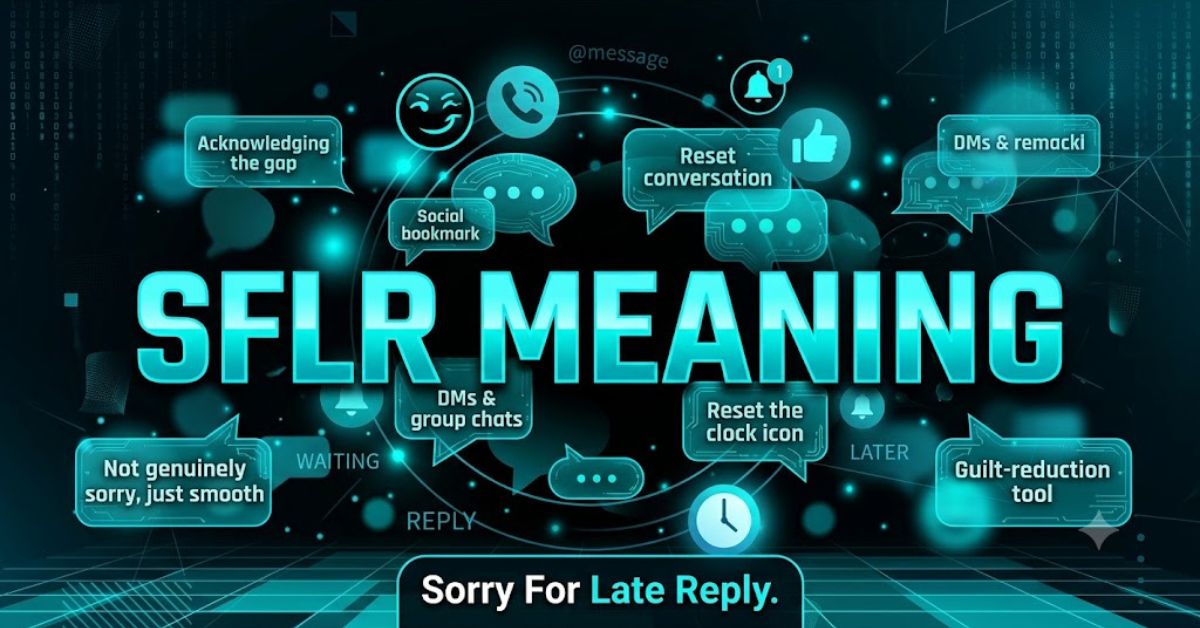
Ever received a message that starts with “SFLR” and wondered what it means? You’re not alone. sflr meaning “Sorry For Late Reply.” People use this texting abbreviation when they finally respond after leaving a message unanswered for a while. You may see it in a text message, group chat, or DM. In most casual conversations, it simply acknowledges the delayed response.
However, SFLR can feel different depending on the situation. A friend might use it casually before continuing the chat. Someone may send it after catching up on unread messages or missed message requests. In a professional email or work chat, though, it can sound too informal. The right words depend on the relationship, timing, and tone in messaging. Once you understand these details, SFLR becomes much easier to read and use.
You Saw Those Four Letters and Had No Clue
You open a message and see “SFLR” at the beginning. For a second, you may wonder what those four letters mean. The sflr meaning is simple: “Sorry For Late Reply.”
People use SFLR when they answer a message after taking longer than expected. The delay could last a few hours, a day, or even several days.
You may see it when someone:
- Missed your earlier message
- Forgot to reply
- Was busy with work or school
- Had several unread messages
- Finally checked their DMs
For example:
You: “Are you still coming tonight?”
Friend: “SFLR! Yes, I’m definitely coming.”
Here, SFLR simply acknowledges the delayed response. It doesn’t always mean something serious happened. Often, it’s just a quick and friendly way to restart the conversation.
What’s Really Happening When Someone Sends This
When someone sends SFLR, they’re usually acknowledging that they took too long to respond. It works like a small apology before they continue the conversation.
The abbreviation can also remove some awkwardness. Instead of explaining every reason for the delay, the person can simply say SFLR and move on.
For example:
Friend: “SFLR, I was at work all day. What were you saying?”
The message tells you two things. They noticed the delay and they’re ready to continue chatting.
SFLR can act like a small guilt-reduction tool in casual texting. Still, it doesn’t prove that someone feels deeply sorry. The real meaning depends on their tone and situation.
You might also see SFLR after:
- Ghosting a conversation
- Missing several unread messages
- Forgetting to answer a DM
- Catching up after being offline
Where This Actually Pops Up in Your Messages
SFLR can appear across many parts of online communication. You might see it in a private text, group chat, or direct message.
Common places include:
- Telegram
- Instagram DMs
- TikTok
- Twitter / X
- Discord
- Casual work chats
For example:
Friend: “SFLR! Just saw your WhatsApp message.”
In a group chat, someone might use it after missing dozens of messages. On Instagram, they could send SFLR after finally checking old message requests.
However, SFLR doesn’t fit every setting. A professional email or job application usually needs clearer and more formal wording.
For instance:
Coworker: “SFLR, just seeing this now.”
Boss: “Thanks for getting back to me.”
The first sounds casual. The second keeps a more professional tone.
Read More : What Does BYW Mean? Is It a Typo or Real Slang?
Why the Same Four Letters Hit Different Depending on the Situation
SFLR doesn’t always carry the same feeling. The relationship, timing, and conversation can change how the message sounds.
Between close friends, it usually feels relaxed. With someone you barely know, it may sound more like a formal apology.
Consider these examples:
Friend: “SFLR 😂 I fell asleep.”
This feels casual and harmless.
Someone you’re dating: “SFLR. Things got crazy today.”
This may sound fine once. Repeated delays could make the message feel less convincing.
The same abbreviation can also sound different when someone is upset. A short “SFLR” after serious news may seem cold or dismissive.
Pay attention to:
- Who sent the message
- How long they waited
- What happened before the reply
- Their usual texting style
- The tone in messaging
Who you’re texting matters
A friend may see SFLR as a normal texting shortcut. A coworker, boss, or older relative may prefer a clearer apology.
This is where people usually mess up
The biggest mistake is using SFLR in a serious conversation. It can sound careless when someone needs a sincere response.
The situation changes everything
A two-hour delay doesn’t always need an apology. After several days, however, SFLR can make the delayed response feel more thoughtful.
Times When SFLR Will Make Things Worse
SFLR works well in casual chats, but it doesn’t fit every situation. Sometimes, using it can make your reply sound careless or too casual.
Avoid SFLR when:
- Someone shared serious news
- A person asked for urgent help
- You’re replying to a boss
- You’re writing a professional email
- You’re applying for a job
- Someone is already upset with you
For example:
Friend: “My dad is in the hospital. Can you talk?”
You: “SFLR, just saw this.”
That reply may feel too cold. A better choice would be, “I’m sorry I didn’t see this sooner. Are you okay?”
The sflr meaning stays the same, but the tone can change completely. When the conversation matters, use real words instead of relying on slang.
Read More : What Does WTV Mean in Text? Depends Who Sent It
Other Ways to Say You’re Replying Late
You don’t always need to use SFLR. Sometimes, a simple sentence sounds warmer and more natural.
Try these alternatives:
- “My bad, just saw this.”
- “Sorry I’m late getting back to you.”
- “Been offline, what’s up?”
- “Sorry for the delay.”
- “Apologies for not replying sooner.”
- “Just seeing this now, sorry about that.”
- “Apologies for my delayed response.”
- “I’m sorry I didn’t see this sooner.”
For example:
Friend: “Did you see my message?”
You: “My bad, just saw this.”
For a professional situation, choose something more formal:
You: “Apologies for my delayed response. I’ve reviewed your message.”
These phrases express the same basic idea as SFLR. However, they give you more control over your tone.
What It Looks Like When Real People Actually Type It
SFLR usually appears at the start of a message. People often add a short reason before moving back to the main topic.
Here are some natural examples:
“SFLR! I fell asleep after work.”
“SFLR, my phone died. Are you still coming?”
“Hey, SFLR. Just saw your DM.”
“SFLR 😂 I’ve been crazy busy today.”
“SFLR! Yes, I’m still down for dinner.”
You can also make the message more personal:
Friend: “Did you watch the new episode?”
You: “SFLR! Not yet. Is it good?”
The phrase doesn’t need a long explanation. Usually, one short apology followed by your actual reply feels natural.
Where This Term Lives Online (and Who Uses It Most)

SFLR belongs mainly to casual texting culture and internet slang. You may notice it in places where people exchange quick messages throughout the day.
Common platforms include:
- Telegram
- Instagram DMs
- TikTok
- Twitter / X
- Slack
- Microsoft Teams
A friend might write, “SFLR, just checked WhatsApp.” In a group chat, someone could use it after missing many unread messages.
Teens and people in their early twenties may be comfortable with texting shortcuts. Older millennials and Gen X users may prefer writing “Sorry for the late reply.”
Usage can vary widely, though. There isn’t one age group or platform that owns the term.
The Mix-Ups That Keep Happening
One common mistake involves confusing SFLR with other abbreviations. For example, SLR usually means “Sorry Late Reply.”
SFTL is different. It commonly means “Sorry For The Loss”, especially when someone expresses sympathy after a death or loss.
That difference matters.
- SFLR: Sorry For Late Reply
- SLR: Sorry Late Reply
- SFTL: Sorry For The Loss
Imagine receiving a message about someone’s loss and accidentally using SFLR. The mistake could create an extremely awkward moment.
People also sometimes assume SFLR proves that someone was busy. It doesn’t. The sender may have been working, sleeping, offline, or simply missed the message.
The abbreviation only signals a delayed response. The real reason depends on the person and the situation.
Questions People Actually Ask About This
Is SFLR rude to use?
No, SFLR usually sounds friendly in casual chats. However, it may seem careless during serious conversations or formal situations.
Can I use it sarcastically?
Yes, SFLR can sound sarcastic when you reply extremely late. The humor depends on your relationship and tone.
Does everyone know what SFLR means?
No, not everyone knows the sflr meaning. Some people may prefer the full phrase, especially older or less frequent texters.
What if I only waited an hour?
An hour usually isn’t long enough for SFLR. A simple reply works better unless your conversation expects quick responses.
Is it the same as SLR?
Almost. SFLR means Sorry For Late Reply, while SLR means Sorry Late Reply. Both acknowledge a delayed response.
Will people think I’m making excuses?
Sometimes, especially if you constantly use SFLR. One honest apology usually feels natural and doesn’t sound like an excuse.
Read More : OT Meaning in Chat: The Real Guide Behind This Confusing Slang
Bottom Line
SFLR is a texting shortcut that means Sorry For Late Reply. If you see it in a text message, group chat, or DM, the SFLR meaning is usually clear. Someone took longer than expected to answer and wants to acknowledge the delay. It can sound friendly and casual when used with a friend. You may also see SFLR after unread messages, missed DMs, or message requests.
Still, the sflr meaning can change with the situation. It may feel too casual in a professional email, work chat, or serious conversation. In those cases, use a fuller apology instead. Phrases like Sorry for the delay or Just seeing this now, sorry about that can sound warmer. Knowing the sflr meaning helps you understand tone in messaging. When you know the context, you can tell whether SFLR feels polite, playful, or slightly awkward.